
 English
 中文简体
 日本語
 한국어
 Español

- Type:
- Industry News
- Date:
- 2026-Oct-16
Content
- 1 Why Kids Are So Obsessed With Squishies: The Short Answer
- 2 The Squeeze Loop: What Happens in a Child's Hands, Head and Shoulders
- 3 Slow Rebound vs Fast Rebound: The Physics Behind the Habit
- 4 Four Material Families and Why They Feel Completely Different
- 5 Why Food and Animal Shapes Beat Generic Blobs
- 6 Size, Grip and Weight: The Details Kids Feel But Never Mention
- 7 Sound, Scent and Surface: The Three Quiet Triggers
- 8 Collecting and Trading: How Squishies Became Playground Currency
- 9 Age by Age: What Each Child Actually Wants From a Squishy
- 10 The Safety Questions Parents Ask Most
- 11 Cleaning, Storage and How Long a Good Squishy Lasts
- 12 Inside a Squishy Factory: Why Two Pieces That Look Alike Feel So Different
- 13 What to Check Before You Buy a Squishy, at Any Volume
Why Kids Are So Obsessed With Squishies: The Short Answer
A child standing in a checkout queue will walk past a wall of bright plastic and still ask for the one soft object on the shelf. That is not only marketing. A slow-rebound squishy does something most toys cannot do: it answers back, silently and immediately, every single time, with no batteries, no screen, no rules and no second player required.
The short answer is this. Kids are obsessed with squishies because one small object delivers three rewards at once: instant control, repeatable sensory feedback, and a character or a food shape that can be named, swapped and collected. The shape is what makes a child pick it up. The material is what keeps it in their hand for months.
Instant control
Pressure, pace and timing belong entirely to the child. Nothing else in a young day works that way.
Repeatable feedback
The two hundredth squeeze behaves exactly like the first one. Consistency is the product, not a bonus.
Social currency
Colours and shapes create comparison, trading and identity inside a group of friends.
Control is the part adults underestimate. A five-year-old cannot decide when lunch ends or when the bus arrives, but they decide exactly how hard to press a squishy and how long to wait for the shape to climb back. That tiny loop gives them authorship over one small piece of an otherwise managed day.
Repeatable feedback is why the habit holds. A toy that works once is interesting; a toy that behaves identically on the two hundredth squeeze becomes a routine. When rebound speed drifts between production batches, children feel the difference immediately, even when they cannot explain what changed. They simply stop reaching for the piece and pick up a different one.
The third reward is social. A single squishy is a toy, but a shelf of them is a conversation. "I have the strawberry tart, you have the melon bun" is a complete social exchange in a seven-year-old's world, and it costs nothing to repeat.
The Squeeze Loop: What Happens in a Child's Hands, Head and Shoulders
Watch the sequence closely and it stops looking random. Press. The body deforms. The palm registers resistance. Release. The surface climbs back slowly. The eyes follow the recovery, and the hand presses again before the piece has finished returning. One cycle lasts two to six seconds, requires no decision, no score and no instruction, and can repeat for twenty minutes without effort.
That rhythm is the reason squishies turn up in waiting rooms, cars, dentist chairs and school desks. Squeezing delivers firm tactile input to the palm and fingers, and that input competes successfully with restlessness. Occupational therapists have used resistance and squeeze tools for years as part of hand-strength and self-regulation routines. Squishies made the same idea pocket-sized, quiet and appealing enough that children choose it themselves rather than being handed it.
Compared with other fidget options, the squishy survives real life better. It is silent, so it passes a classroom. It has no loose parts, so it survives a backpack. It fits a fist, a coat pocket or a lunchbox. And it works just as well alone as it does in a group, which matters for the child who is not ready to share anything yet.
Why a fidget becomes a favourite
Fidget tools are used and forgotten. Favourites are named, defended, photographed and slept beside. The difference is identity. A bear with a strawberry hat, a cat on a cushion or a slice of cake with visible layers gives the material a personality. Once a squishy has a name, the child stops treating it as equipment and starts treating it as company, and that shift is what turns a two-week novelty into a two-year attachment.
Slow Rebound vs Fast Rebound: The Physics Behind the Habit
Two squishies can come out of the same mould, use the same pigment and feel nothing alike. The deciding variable is rebound time: the number of seconds between release and full recovery. Typical figures across the category look like this.
Typical recovery time after release (seconds)
Gel-bead ball
0.2 s
Classic PU foam
1.5 s
TPR stretch toy
2.5 s
Slow-rebound silicone
5.0 s
Silicone with soft filling
6.5 s
Figures reflect the usual range found in retail squishy toys and pendants. A one-second difference is small on paper and enormous in a child's hand.
Slow recovery is more satisfying because the child can watch it happen. A fast toy looks as though nothing occurred at all. A slow one appears to push back, and that apparent response invites the next press. There is also a small anticipation payoff built into every cycle: the hand waits, the brain waits, and the reward lands a second later, then repeats.
The second variable is surface hardness, usually quoted as Shore A. Too soft and the piece pancakes into a flat disc that never fully recovers, which is why some cheap toys end up looking permanently squashed. Too firm and it becomes an adult stress ball that children lose interest in within a day. For children's hands, the workable band sits roughly between Shore A 8 and 20, with an interior filling that keeps the outer skin taut rather than loose and wrinkly.
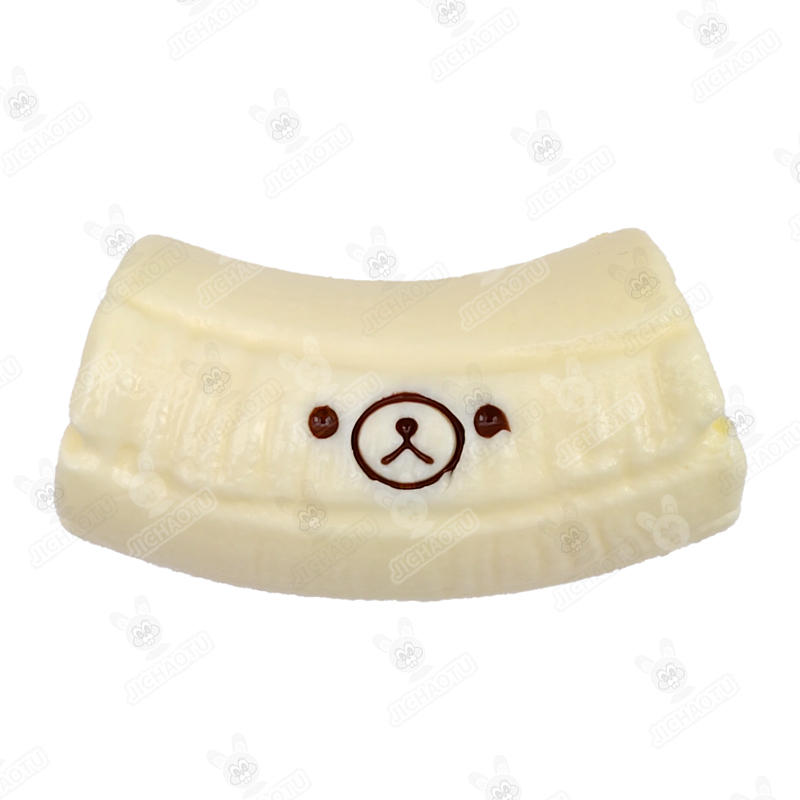 Relax Bear 2 Food-Grade Silicone Squishy CharmsFor buyers weighing softness and recovery, these food-grade silicone bear charms offer slow rebound, multiple shapes, and keychain-friendly use.View Product →
Batch consistency is the quiet make-or-break. Silicone viscosity, curing temperature, curing time and pigment load all shift rebound slightly. A two-second difference between two production runs sounds trivial in a specification sheet and feels enormous in a child's hand, which is exactly why rebound should be checked batch by batch and not once at the prototype stage.
Four Material Families and Why They Feel Completely Different
Hand four squishy types to the same child and they will sort them in seconds, then keep the one they preferred and rarely change their mind. The materials behind those pieces behave very differently in the hand, in the wash and in a school bag.
| Material | Rebound feel | Surface | Washable | Usual lifespan in a child's hands |
|---|---|---|---|---|
| PU foam | Fast to medium, springs back quickly | Matte, can crumble at edges | Surface wipe only | Weeks to a few months |
| TPR | Stretchy, slow to settle | Smooth, slightly tacky | Rinse with care | Months, unless stretched hard |
| Gel or bead filled | Very fast, sharp bounce | Glossy, seam sensitive | Surface wipe only | Months, until a seam leaks |
| Food-grade silicone | Slow, calm recovery | Matte to satin, powder touch | Yes, soap and water | One to three years with normal use |
For pendants, food shapes and anything likely to be handled after a snack, food-grade silicone is the practical answer: it tolerates washing, holds its shape and does not shed foam dust. Foam still wins for very large pieces and the lowest price points, and gel beads still win for that sharp bounce that some children like. But the slow, calm recovery that children return to belongs to silicone and high-grade PU.
Why Food and Animal Shapes Beat Generic Blobs
A plain cube made from premium slow-rebound silicone will sell a fraction of what a bear with a strawberry hat sells, even when the two weigh exactly the same. Shape is not decoration. Shape is the reason the first squeeze ever happens.
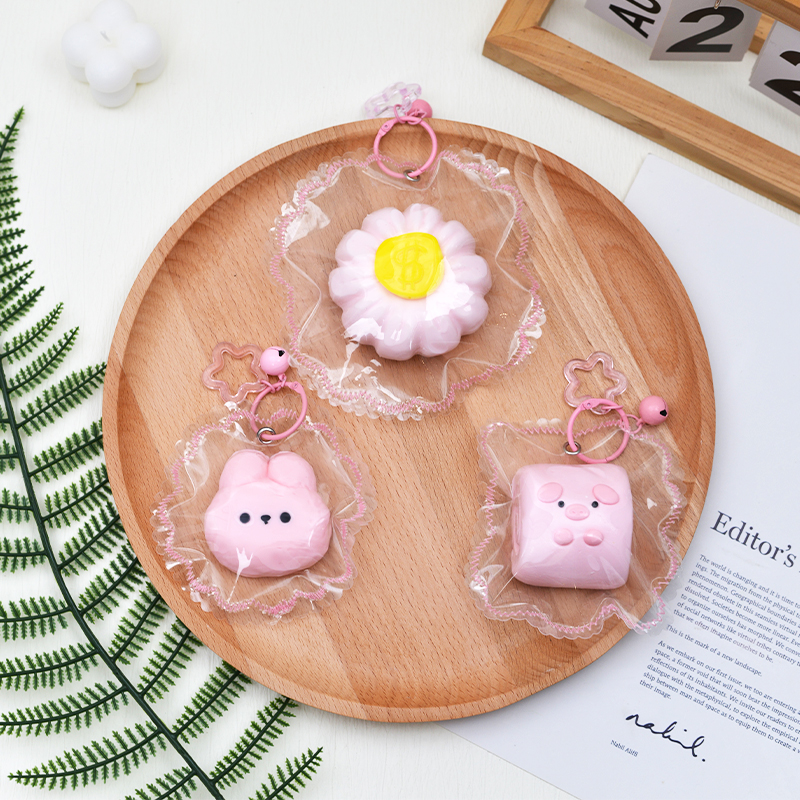
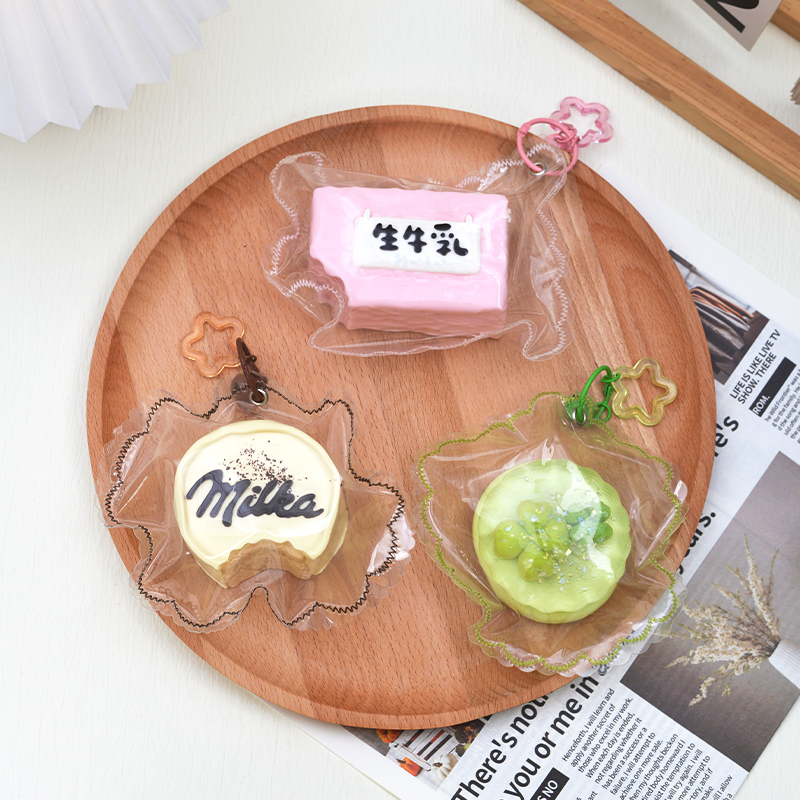
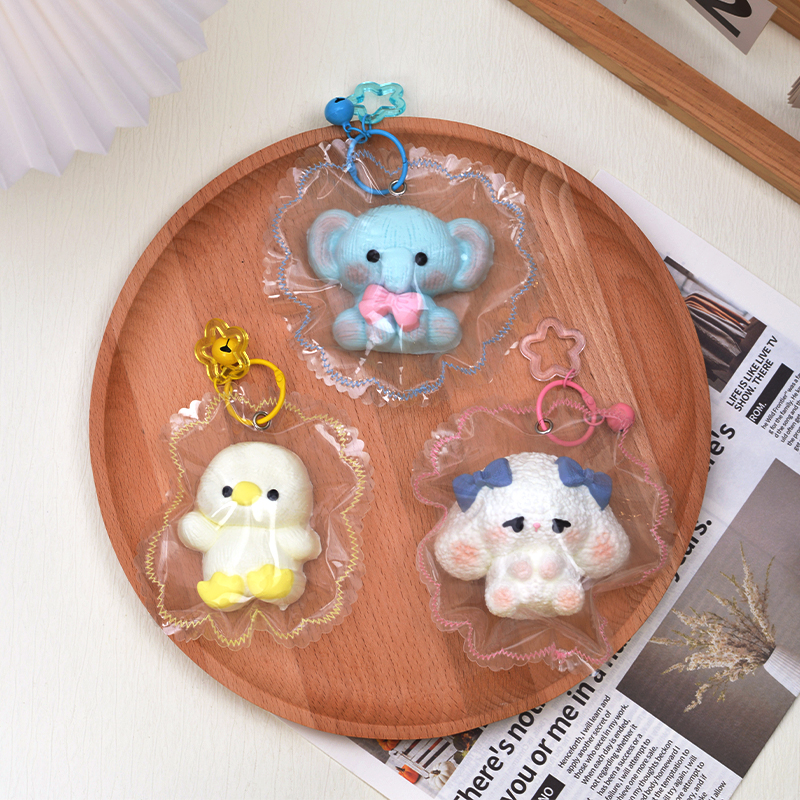
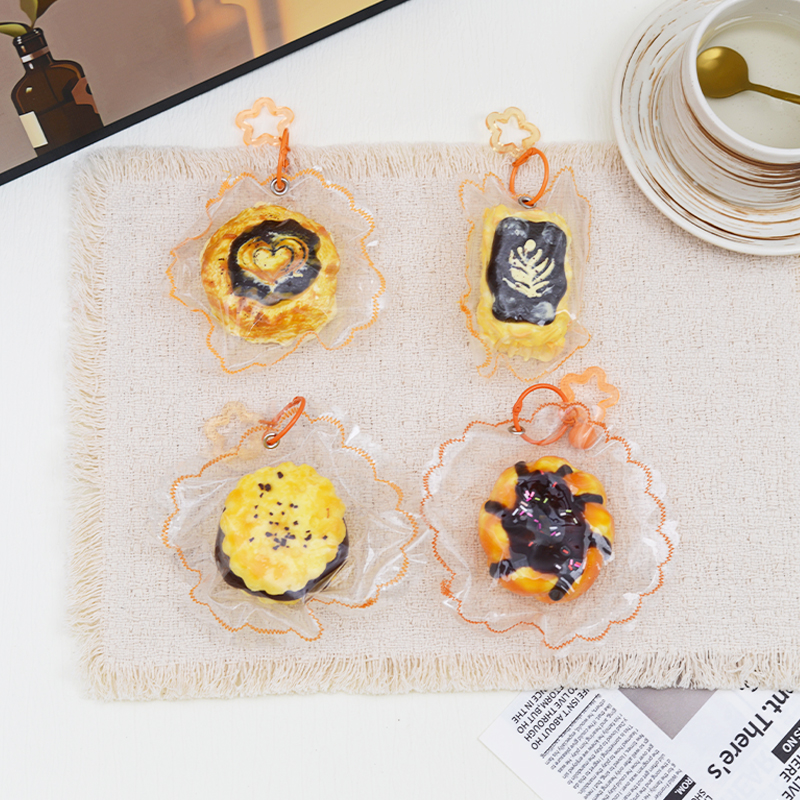
Familiar shapes let a child decide in under a second. A croissant, a bunny, a milk bun or a penguin all arrive with feelings already attached, so the child does not have to learn how to react. Miniaturisation does the rest. A palm-sized version of something they like can be crushed, squeezed and folded, which is precisely what a young hand wants to do with an appealing object.
Food shapes carry extra warmth because they attach to real memories: bakery trips, ice cream after school, warm toast on a cold morning. Pair a food shape with an animal and recognition doubles, which is how designs such as a bear holding ice cream or a bunny with a carrot came to dominate the category.
 Bear Ice Cream Squishy Toy with Lanyard CharmFood-shaped bear popsicle squishies in four colorways, pairing dessert recognition with slow rebound; useful when checking color consistency across a range.View Product →
Colour and shape consistency across a range matter more than any single piece. If the pink glaze on one tart shifts toward salmon between production runs, children spot it before their parents do, and the set stops looking like a set. Treating colour matching as a quality-control step rather than an afterthought is what protects a whole series, and it is one of the reasons established factories invest in pigment batching rather than mixing colour by eye.
Size, Grip and Weight: The Details Kids Feel But Never Mention
A 7 cm piece and a 12 cm piece can use the same formula and the same mould detail, yet behave like two different toys once they reach a hand. Small pieces cannot be compressed with a whole palm, which is how toddlers prefer to squeeze, while oversized pieces cannot be worked one-handed, which is how older children fidget at a desk.
| Age group | Approximate hand length | Comfortable body size | Weight that feels right | Design notes |
|---|---|---|---|---|
| 2 to 4 years | 9 to 10 cm | 6 to 8 cm | 40 to 60 g | Chunky silhouette, no small parts, softest press |
| 5 to 7 years | 11 to 12 cm | 8 to 10 cm | 60 to 90 g | Quicker rebound, clearer detail, more varied shapes |
| 8 to 12 years | 13 to 15 cm | 10 to 13 cm | 90 to 150 g | Pendant loops, firmer feel, collectible series |
| Teens and adults | 17 cm and above | 13 cm and above | 150 to 250 g | Desk pieces, deeper resistance, more muted colours |
Weight is the most ignored number in the whole specification, and it changes perception more than colour does. A 40 g piece feels light and disposable. A 150 g piece feels substantial and worth protecting. Children describe that difference with one word, good or cheap, and they are usually reacting to mass rather than to the material itself.
Sound, Scent and Surface: The Three Quiet Triggers
The sound of air leaving
A slow-rebound squishy is not silent. Press it and you hear a soft puff as air escapes the open cells or as the surface releases. The sound should stay low and muffled. A sharp squeak usually means the skin is too thin or the surface is too glossy, and it also signals a piece that will tear at the seam earlier than it should.
Scent, and the difference between built-in and sprayed-on
Scented pieces sell quickly to older children and to gift buyers, because smell is the fastest route to the memory of a bakery or a sweet shop. The engineering matters more than the idea. Fragrance blended into the compound lasts months, while fragrance sprayed onto a finished surface fades within weeks and leaves a stale, dusty note behind. For the under-three group, unscented stays the safer default, since fragrance is one of the more common sensitivity triggers.
Matte, glossy and the sticky problem
Glossy surfaces photograph beautifully and collect fingerprints just as well. Matte surfaces survive real life, hide marks and keep looking new after weeks in a school bag. Dust clinging to a piece is not dirt; it is a surface-energy issue, and a lightly powdered matte finish reduces it. That single finishing step is often what separates a piece a parent keeps on a desk from one that ends up at the bottom of a toy box.
Collecting and Trading: How Squishies Became Playground Currency
One squishy is a toy. Four pieces from the same series become a collection, and a collection immediately creates hierarchy. Children group their pieces by colour, size and family: the bears, the tarts, the buns, the rice balls. They notice which one is slightly bigger, which one has a glossier finish and which one their friend is missing.
Trading rules appear within days and are surprisingly strict. Duplicates become swap pieces. Condition matters, so a chewed ear or a stretched loop kills a deal on the spot. Value is driven by detail quality, colourway and size, and children defend that value with more energy than most adults bring to a negotiation.
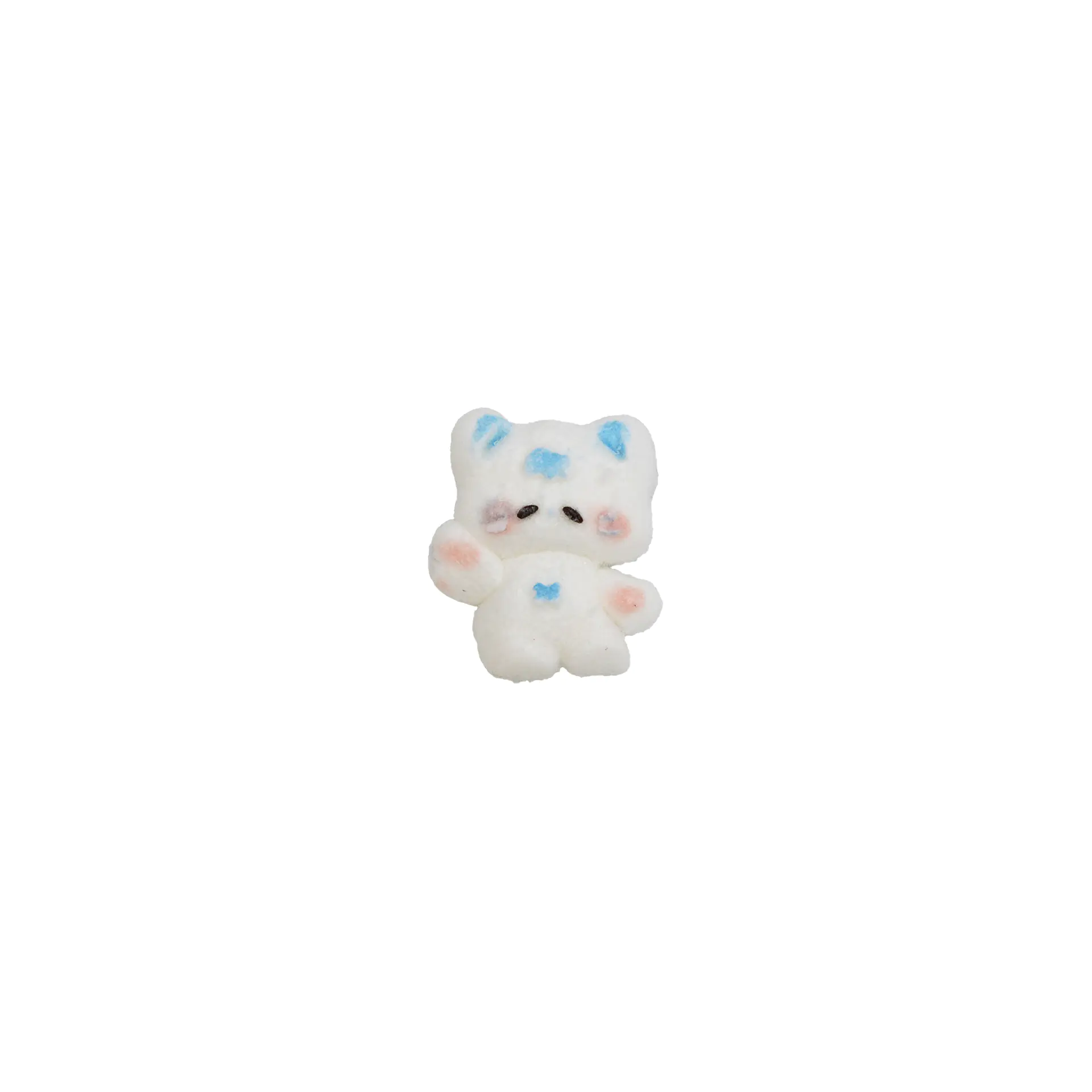 Fluffy Milk Puff Cute Pets Silicone SquishyAnimal-themed food-grade silicone squishies with cartoon faces and matching keychain bells; their small sizes and colorways suit collecting, swapping, and durability-minded buyers.View Product →
Durability decides whether a collection survives a school term. Loops and keyring attachments take the hardest load, so they should be moulded thick rather than glued on. Direct sunlight fades pigment quickly, hot car dashboards soften and deform pieces, and a shallow storage box prevents the pile from tangling itself into knots. A collection kept out of the sun, away from heat and loosely stacked will still look presentable a year later.
Age by Age: What Each Child Actually Wants From a Squishy
2 to 4 years: cause and effect
This group is not collecting anything. They are testing whether the world responds. The ideal piece is chunky, safe, easy to grip with a whole hand, and slow enough that the deformation is visible. Fast rebound goes unnoticed; slow rebound reads as an answer.
5 to 7 years: characters and naming
Names arrive first, then rules. A squishy becomes a pet, a shop item or a patient. Pieces with clear faces, food detail and a couple of sibling designs in the same series do best, because the child can build a small story around them.
8 to 12 years: series, trading and desk use
This is peak collecting age. Series design, colourways and size differences drive the interest. Pendants matter here, because the piece travels to school, and durability at the attachment point matters more than any detail on the face.
Teens and adults: quiet desk company
Older users want resistance, restraint and a surface that does not look childish on a desk. Muted colours, denser filling and a slightly firmer press keep the piece in use during calls, study sessions and long afternoons.
The Safety Questions Parents Ask Most
Almost every safety question comes back to four things: what the piece is made of, whether anything can come loose, whether it smells right, and whether the factory can prove what it claims. Food-grade silicone sits at the top of that list because it is inert, does not release plasticisers and can be washed rather than wiped.
Certification is the part that separates a document from a promise. In practice, a piece intended for the United States usually needs Children's Product Certificate support with phthalate and heavy-metal testing behind it, while European buyers expect EN71 results and, for food-contact silicone, test protocols aligned with LFGB and FDA requirements. Factory-level audits such as BSCI and a quality management standard such as ISO9001 sit underneath those product tests. Parents can ask for the paperwork. Any supplier that treats the request as unreasonable is telling you something useful.
Small parts deserve equal attention. A pendant loop, a bead or a glued eye can detach under determined chewing, so anything below the age guidance on the label should be a single moulded piece with no attached components. Smell is the fastest field test: a mild, neutral odour that fades within a day is normal after packing, while a sharp chemical smell that persists for a week is not. Detailed testing criteria, material checks and the specific tests worth requesting are set out in our silicone squishy toy safety guide.
Cleaning, Storage and How Long a Good Squishy Lasts
A well-made silicone piece handles years of use if it is cleaned properly and kept away from heat. Warm water with a drop of mild soap, a gentle rub, a rinse and air drying in the shade is enough for routine cleaning. Alcohol, acetone, bleach and hot dishwashers are the fastest way to dull a surface, harden the skin and shorten the life of the piece.
| What you notice | Likely cause | What to do |
|---|---|---|
| Surface feels sticky or tacky | Hand oils, sunscreen or lotion build-up | Wash with mild soap, dry fully, avoid silicone-based creams nearby |
| Dust clings no matter what | High surface energy plus static in dry air | Rinse and air dry; a light powder finish helps until the next wash |
| Small tear at a seam or loop | Repeated pull at the weakest point | Retire the piece from pocket use; moulded, thick loops prevent it |
| Colour looks faded | Ultraviolet light exposure | Store in a closed box away from windows |
| Filling feels lumpy | Foam or filling compaction after heavy squeezing | Not repairable; indicates a low-density interior in the first place |
Storage is simple: a shallow box, away from sunlight, heat and sharp objects. Squeezing a filing tray of squishies into a small bag is the most common cause of deformities that never fully recover, because the material is asked to hold a compressed shape for hours rather than seconds.
Inside a Squishy Factory: Why Two Pieces That Look Alike Feel So Different
The gap between a good squishy and a disappointing one usually appears before the first unit is ever packed. It starts with the mould. A steel mould with a polished cavity produces consistent wall thickness and clean detail, while a cheap resin mould wears unevenly and quietly changes the dimensions of every piece it makes. Wall thickness decides how the whole body deforms, so a variation of half a millimetre is enough to make the same character feel softer on one side than the other.
Mixing comes next. Silicone has to be degassed before it is poured, or trapped air turns into small voids that read as weakness the moment a child squeezes hard. Curing temperature and time then fix the rebound character of the whole batch. Cut a curing cycle short to gain output and the piece comes out firmer, with a faster return and a slightly greasy surface. No label will tell you that, but a hand will.
Finishing and quality control close the loop. Trimming removes flash, dusting controls tack and the dust issue, and batch checks catch rebound drift before it reaches a carton. On top of that sit the tests that matter for shipping: tensile and tear checks, migration testing, colour-fastness, phthalate screening and a squeeze-and-release check on samples pulled from the finished goods, not from a hand-made prototype. A factory that keeps samples from every production run can trace a complaint back to its cause within minutes, and that ability is worth more than any brochure photograph.
What to Check Before You Buy a Squishy, at Any Volume
The good news is that the same five-minute test works for a parent in a shop and for a buyer evaluating several thousand units. Squeeze the piece five times and watch each recovery. The surface should return fully, at the same speed, with no sticky residue and no visible stress mark where your fingers pressed.
- Squeeze and release five times. If recovery slows noticeably by the fifth press, the formula or the curing is inconsistent.
- Press a thumbnail into the surface and release. A permanent dent means the interior density is too low.
- Check the seam and the loop. A moulded, thick attachment point outlasts a glued one by a wide margin.
- Smell the piece. A mild odour that fades in a day is normal; a sharp chemical smell is not.
- Weigh it in your hand. If it feels weightless, it will feel cheap within a week.
- Read the age marking and check for any small attached parts that could come free.
- Ask for test documents covering the exact material used, not a generic certificate for a different product.
- For bulk orders, request samples pulled from a production run rather than a hand sample made for the meeting.
Those checks also explain why similar-looking pieces carry very different prices. A consistent factory invests in steel moulds, degassing equipment, controlled curing and regular testing, and those costs show up in the unit price long before they show up on the label. We build slow-rebound squishy toys in our own factory in Yiwu, working across three shape families (animals, desserts and savoury snacks) with food-grade silicone compounds and batch-level oscillation checks, which is why the press feels the same on the first unit and the ten-thousandth; you can see the range on the slow rebound squishy toy catalogue whenever you want to compare shapes side by side.
In the end, a child will never read a specification sheet, and they do not care about Shore A values or curing curves. Their test takes ten seconds: five squeezes, and then a look at whether the shape comes back slowly enough for them to watch it. If it does, the toy stays in their hand. If it snaps back instantly, it ends up in the box with everything else.