
 English
 中文简体
 日本語
 한국어
 Español

- Type:
- Industry News
- Date:
- 2026-Oct-09
Content
Ask a room full of anxious people which squishy calms them most and you will hear very different answers: a palm-sized bear, a slice of cream cake, a soft bun that slowly rises back into shape. After more than a decade of manufacturing slow-rebound squishies in Yiwu, we have learned that the answer rarely comes down to which character is cutest. It comes down to three practical things: how the material rebounds, how the surface feels in a clenched hand, and how safe it is to squeeze for hours.
This guide explains what tends to work, which shapes help in specific situations, and how to check quality before buying, whether you are choosing one squishy for yourself or several thousand for a store, a classroom or a care programme.
What Makes a Squishy Effective for Anxiety?
Anxiety often shows up as restless hands: tapping, picking, rubbing, scrolling. A squishy works by giving those hands a job. The squeeze sends steady pressure through the palm, the resistance holds attention for a few seconds, and the nervous system gets something concrete to focus on instead of a loop of worried thoughts.
For that to happen, the toy needs to meet a few conditions:
- Squeeze resistance that pushes back. A squishy that collapses instantly offers almost no feedback.
- Slow rebound. A slow return keeps your hand busy longer and creates a steady, repetitive rhythm.
- A soft, matte surface. Smooth-to-touch materials feel soothing; sticky surfaces quickly become irritating.
- Silence. No squeaks, crackles or snapping.
- No strong smell. Fragrance can be pleasant, but it can also irritate in small rooms.
- Safety and durability. A calming tool should not shred, leak or leave residue.
Which Squishies Are Best for Anxiety?
Slow-rebound silicone squishies
If we had to pick one category, it would be this one. Slow-rebound silicone gives a firm, dense squeeze and returns over several seconds rather than springing back at once. The material is also washable, holds its shape after thousands of squeezes, and can be produced to food-grade standards. In our own production we use food-grade silicone that meets FDA, LFGB and SGS requirements, which matters when a toy is handled constantly, sometimes by children, sometimes right before a meal.
Comforting animal shapes
Animals carry a sense of companionship that abstract fidgets do not. A bear, a puppy or a sleepy pet gives anxious hands something to hold and something to look at, which helps during the wind-down part of the day: the last hour before bed, a long commute, or the ten minutes after a difficult conversation.
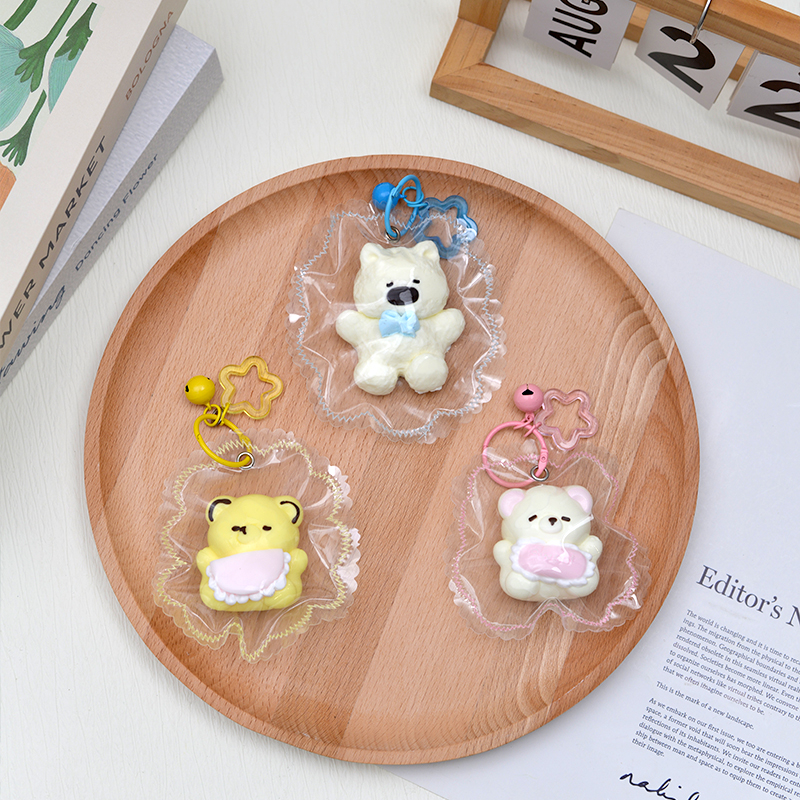
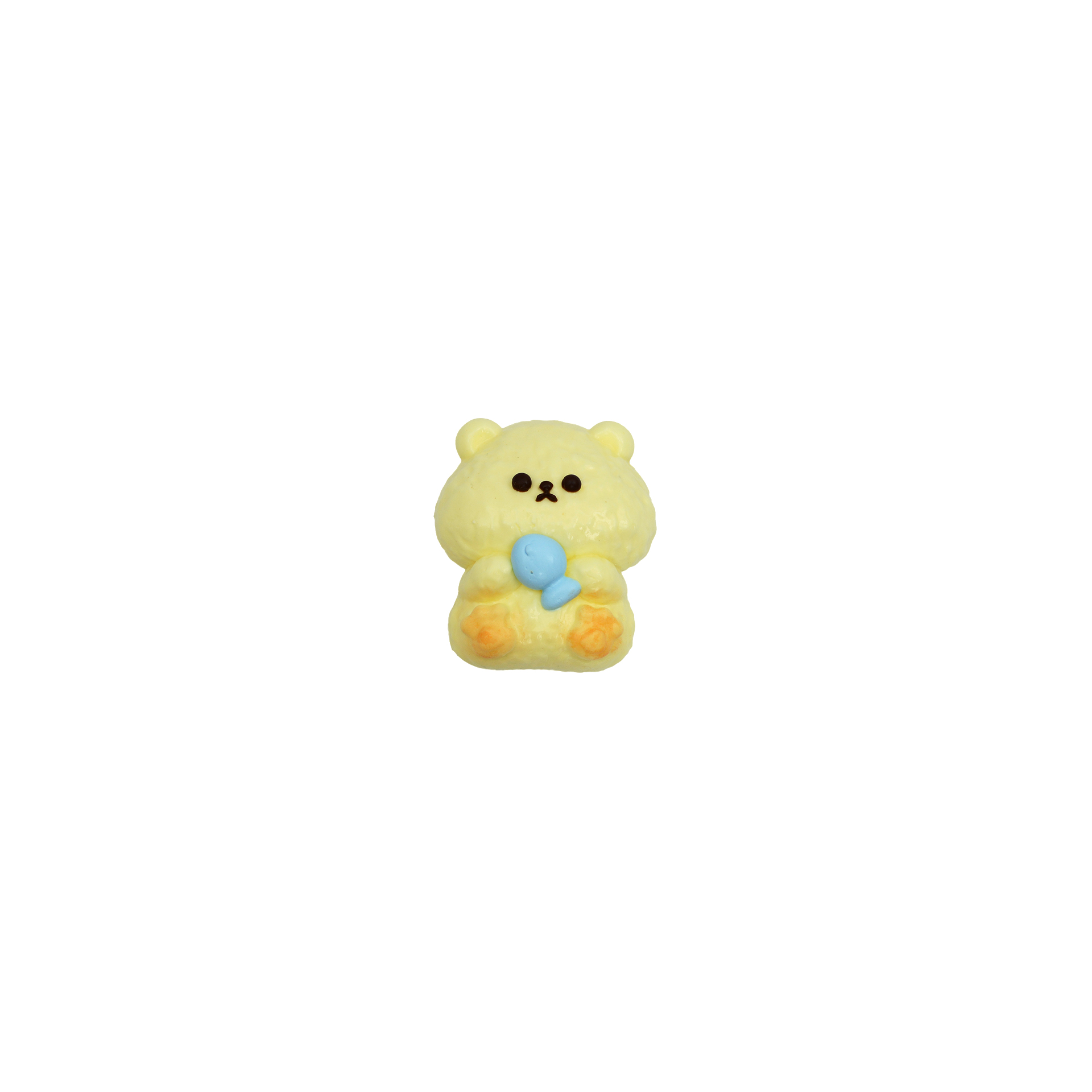
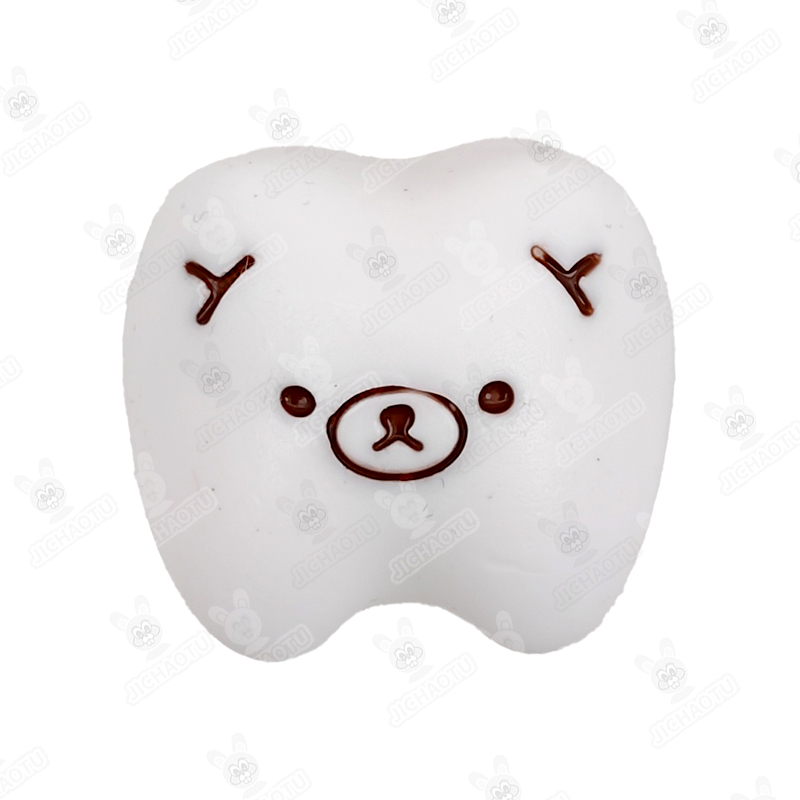 Relax Bear 1 Squishy Food-Grade Silicone Stress ToyMilky-white bear-shaped silicone squishy with slow rebound, flower keychain, and four styles, suited to calming handheld fidgeting before bed or during breaks.View Product →
Shapes built around rest and hugging, such as small bears and curled pets, tend to be the ones people reach for most when the goal is simply to feel calmer.
Dessert and food shapes
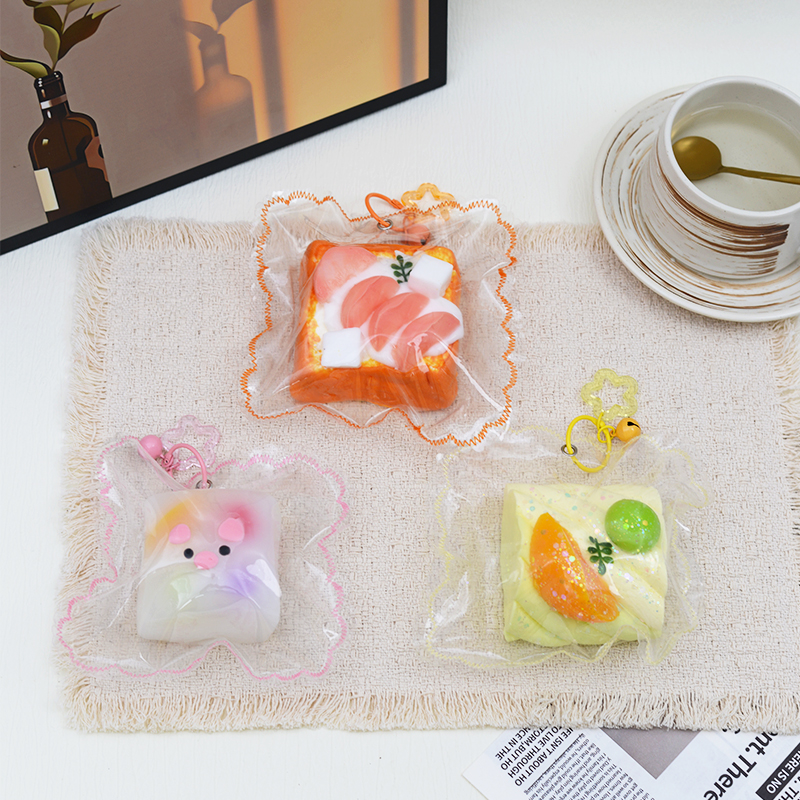
Bakery and food designs work differently: they rely on warmth and familiarity. A cake, a tart or a buttered bun reads as a treat, and the association is comforting rather than stimulating. In our experience this category is popular with adults at work and with students, partly because the shapes look good on a desk and do not feel obviously therapeutic.
Pendant and keychain squishies
Small slow-rebound pendants can be clipped to a bag, a lanyard or a pencil case, so the calming tool travels with the person. They work best as a supplement: the squeeze is smaller, so the effect is more about a quick reset than a long calming session.
Slow Rebound vs Fast Bounce
Not all squishies behave the same way under pressure. The table below sums up the differences we see most often in production and in customer feedback.
| Feature | Slow-rebound silicone | Fast-rebound foam or gel |
|---|---|---|
| Squeeze feel | Dense, firm, gradual | Light and springy |
| Rebound time | Several seconds | Instant |
| Noise | Usually silent | Often crinkles or squeaks |
| Durability | Holds shape after heavy use | Can crumble or dry out |
| Surface | Soft, matte, washable | Can feel sticky over time |
| Best for | Anxiety, desk and bedtime use | Short bursts of fidgeting |
If the goal is anxiety relief rather than novelty, slow rebound is usually the better investment: it keeps the hand occupied for longer and does not demand attention with sound.
Matching the Squishy to the Moment
The same toy does not fit every situation. When we talk with buyers selecting squishies for a specific group, we start with the moment the squeeze is meant to interrupt:
- At a desk. A medium, dense squishy that can be squeezed with one hand while the other stays on a keyboard.
- During exams and study sessions. Quiet, low-odour pieces that sit in a pencil case without distracting classmates.
- At bedtime. Something soft and rounded to hold while reading or settling down.
- On the move. A pendant or keychain size that survives being squashed in a bag.
- For younger children. Larger pieces with no detachable small parts and a washable surface.
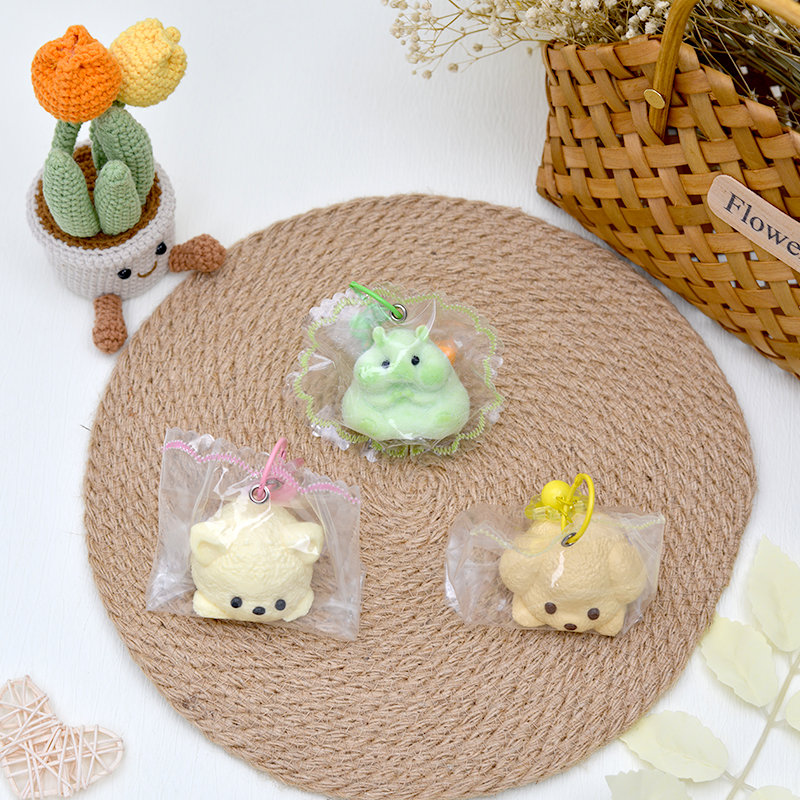
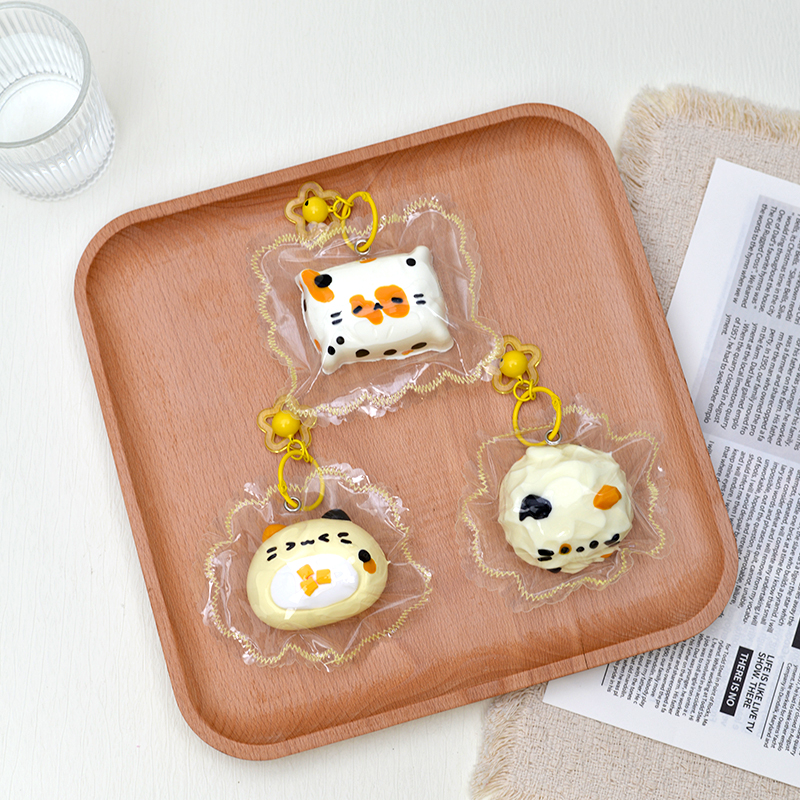
Soft, hugging-style pets are a good middle ground for most of these moments, because they are quiet, easy to grip and visually reassuring.
 Hugging Cute Pets Squishy Silicone Stress Relief CharmAnimal-shaped food-grade silicone charm with hugging details, matching flower keychain and bell, offering soft slow rebound for quiet handheld calming and portable decoration.View Product →
Safety and Material Checklist Before You Buy
Because a squishy is squeezed against the skin and sometimes held near the face, material quality is part of the calming effect. A toy that smells chemical or starts flaking after a week creates exactly the kind of low-level stress it was meant to reduce.
- Look for food-grade silicone or another well-documented soft material.
- Ask about third-party testing: FDA, LFGB and SGS for materials, and ISO 9001, CPC or BSCI for manufacturing compliance.
- Check that the surface is washable and does not leave residue on hands.
- Avoid strong artificial fragrance if the user is sensitive to smells.
- Confirm that small parts are securely attached if the toy will be used by children.
We keep a longer checklist in our squishy toy safety and selection guide, including the tests we run before anything leaves the factory.
Buying Squishies at Scale: Classrooms, Clinics and Gifting
Anxiety-related demand increasingly comes from organisations rather than individuals: schools building calm corners, counsellors stocking sensory tools, brands adding a stress-relief line, and companies ordering gifts for staff. In those cases the priorities shift from which shape looks nicest to consistency, safety documentation and lead time.
As a manufacturer, we handle this side of the business every day. Our factory in Yiwu covers 10,000 square metres with more than 800 staff, and we produce both under our own brand, Jichao Rabbit, and as an OEM partner for buyers who need custom shapes, colours and packaging. Samples are the fastest way to judge squeeze feel and finish, and a small trial order usually answers more questions than a catalogue. Questions worth raising early include:
- Which certifications does your market require?
- What rebound speed and firmness do you need?
- How will the squishies be packed, and do they need individual hygiene wrapping?
- What order volume and delivery window are realistic?
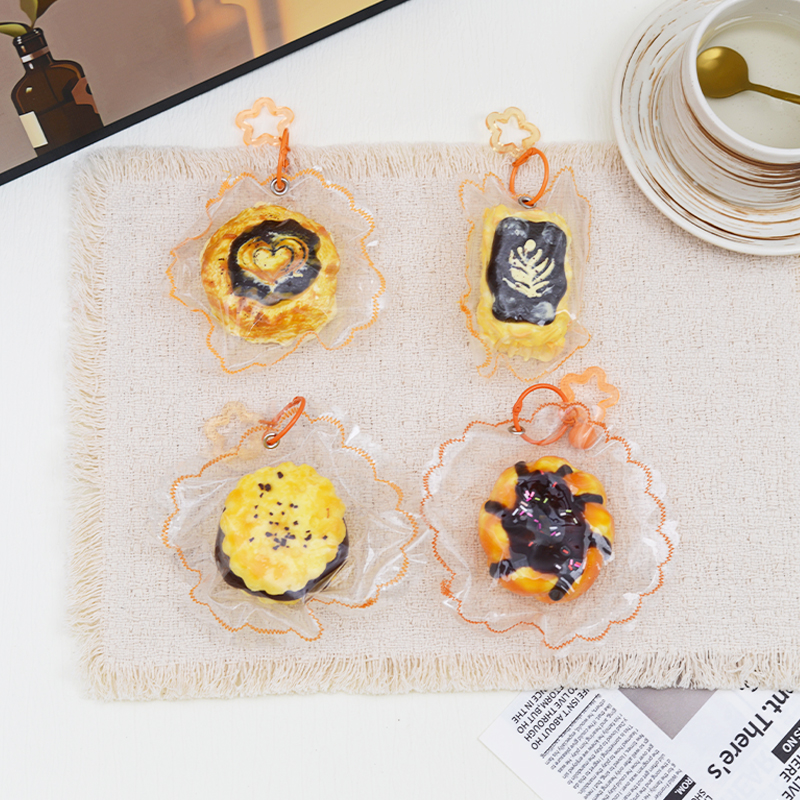
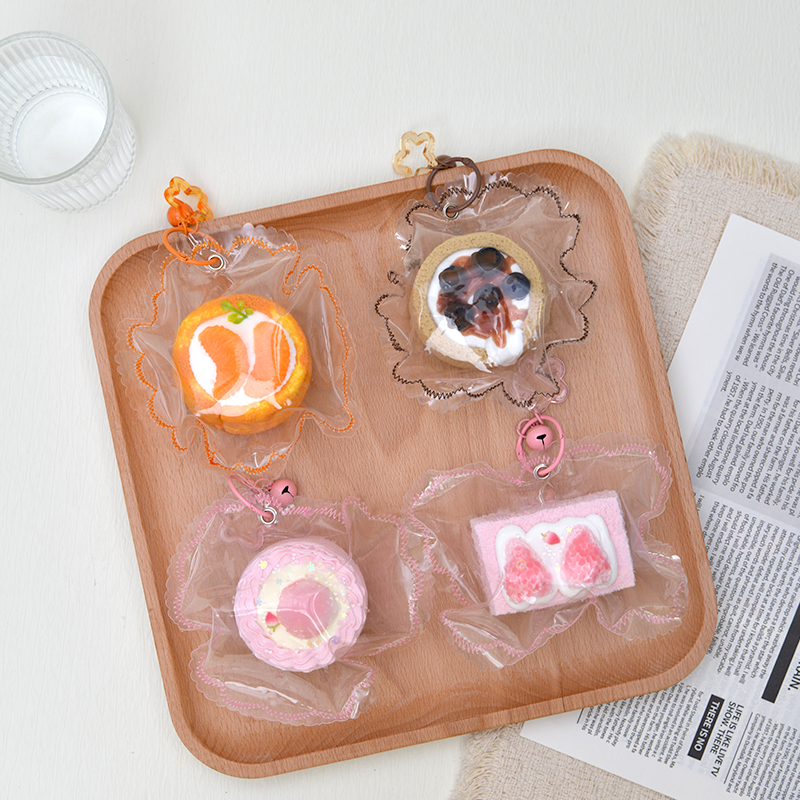
Dessert-themed pieces are often the easiest entry point for gift and retail programmes, because the shapes photograph well and appeal across age groups.
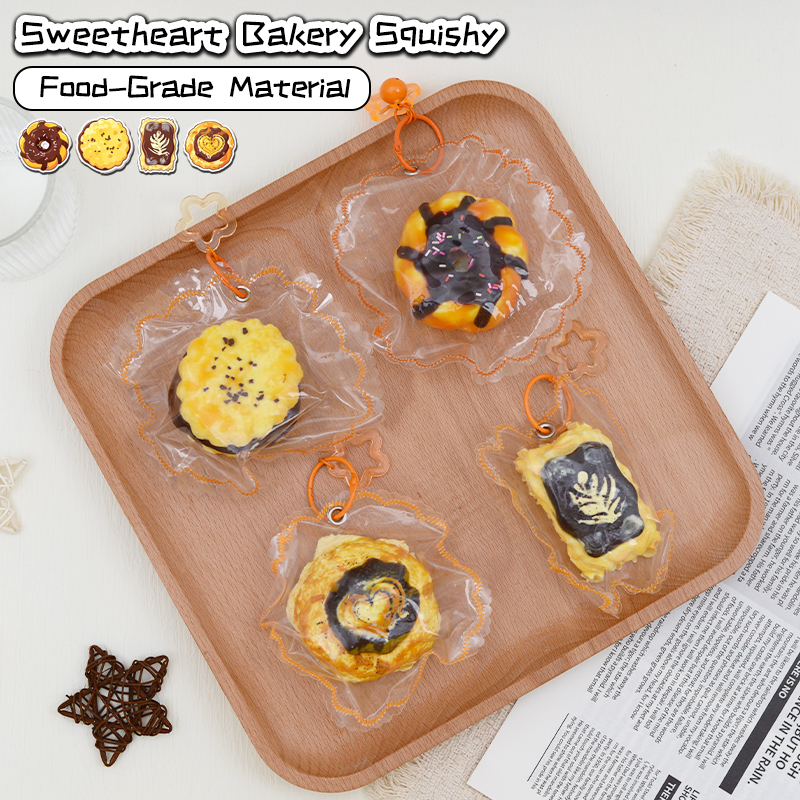 Afternoon Bakery Squishy Food-Grade Silicone Dessert CharmRealistic bakery-themed silicone squishy in four dessert styles with flower keychain, soft slow rebound, and gift-ready packaging for stress relief or retail assortments.View Product →
If you would like a starting point, you can browse our full squishy toy range or send us your requirements directly.
Frequently Asked Questions
Are squishies actually good for anxiety?
They are a simple grounding tool rather than a treatment. The squeeze gives restless hands a repetitive physical task, which many people find calming in the moment. They work best alongside breathing exercises, regular breaks and, where needed, professional support.
Should I choose a big or a small squishy?
For desk and bedtime use, a palm-sized piece is usually the most comfortable, because the whole hand can wrap around it. Small pendants are better for quick resets on the move.
How do I know a squishy is good quality?
Check the squeeze first: it should push back and return slowly. Then check the surface for tackiness, the smell, and the paperwork for material and factory certifications.
The short answer is that the squishies best for anxiety are the ones that push back slowly, stay quiet, feel soft and clean in the hand, and suit the moment you actually need them. Choose a slow-rebound, food-grade piece in a shape that puts you at ease: a resting bear for bedtime, a familiar pet for a desk, or something sweet-looking for a bag. If you are selecting for a group or a store, the same rules apply; you simply need a supplier who can document them.